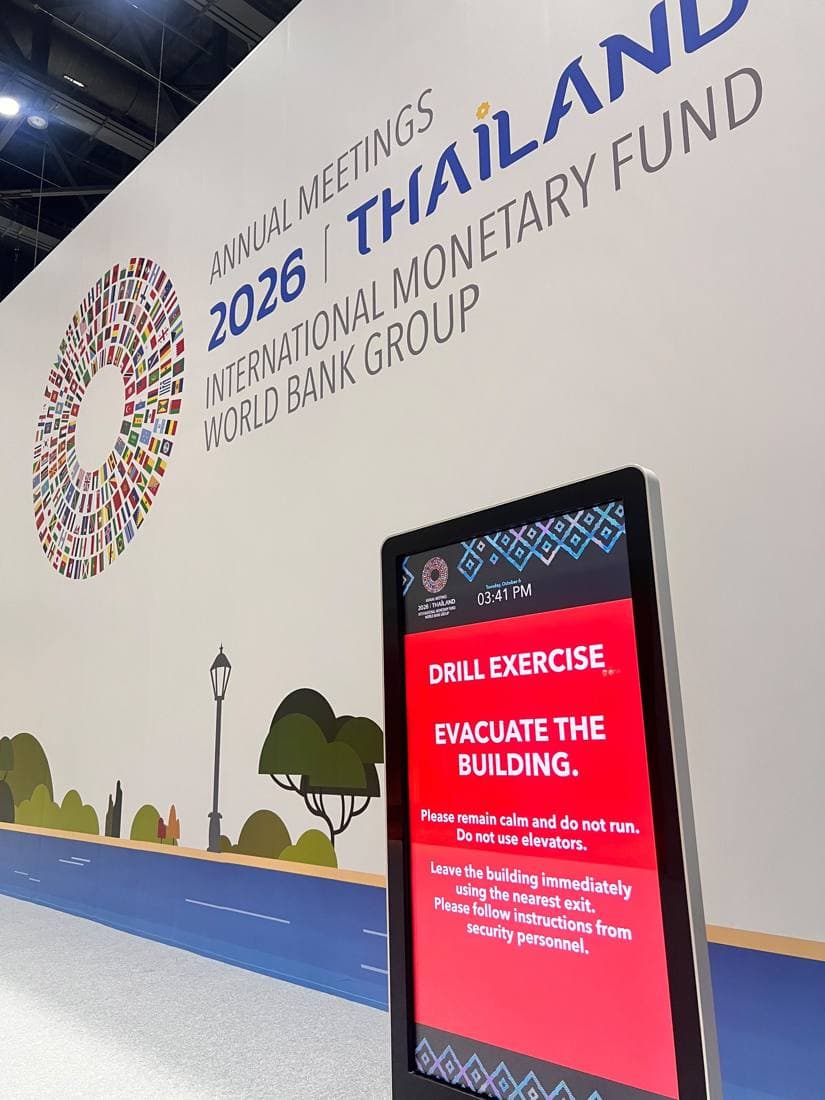
Tuesday 6 October, 3:41pm. Six days before the delegates arrived.
On Tuesday 6 October, at 3:41 in the afternoon, the screens in the Queen Sirikit National Convention Center turned red. Drill exercise. Evacuate the building. Do not run. Do not use the elevators.
The point of a drill is that nobody panics. Six days before roughly 15,000 people from 191 member countries arrived in Bangkok, the people running the venue rehearsed the worst moment of the week so the rest of it could be uneventful.
Of all the photos from Bangkok, that screen is the one I keep coming back to. It is the most honest description of media operations I have seen in a long time.
Resilience is rehearsed, not purchased
The theme of this year's meetings is "Empowering People, Building Resilience." Ministers spent the week on the macro version: debt, growth, shocks nobody saw coming. The media version is smaller and far more practical.
Nobody buys resilience the week of the event. You rehearse it before anyone shows up. You find the broken upload path on a Tuesday afternoon in build week, not during the plenary.
What the wall actually shows
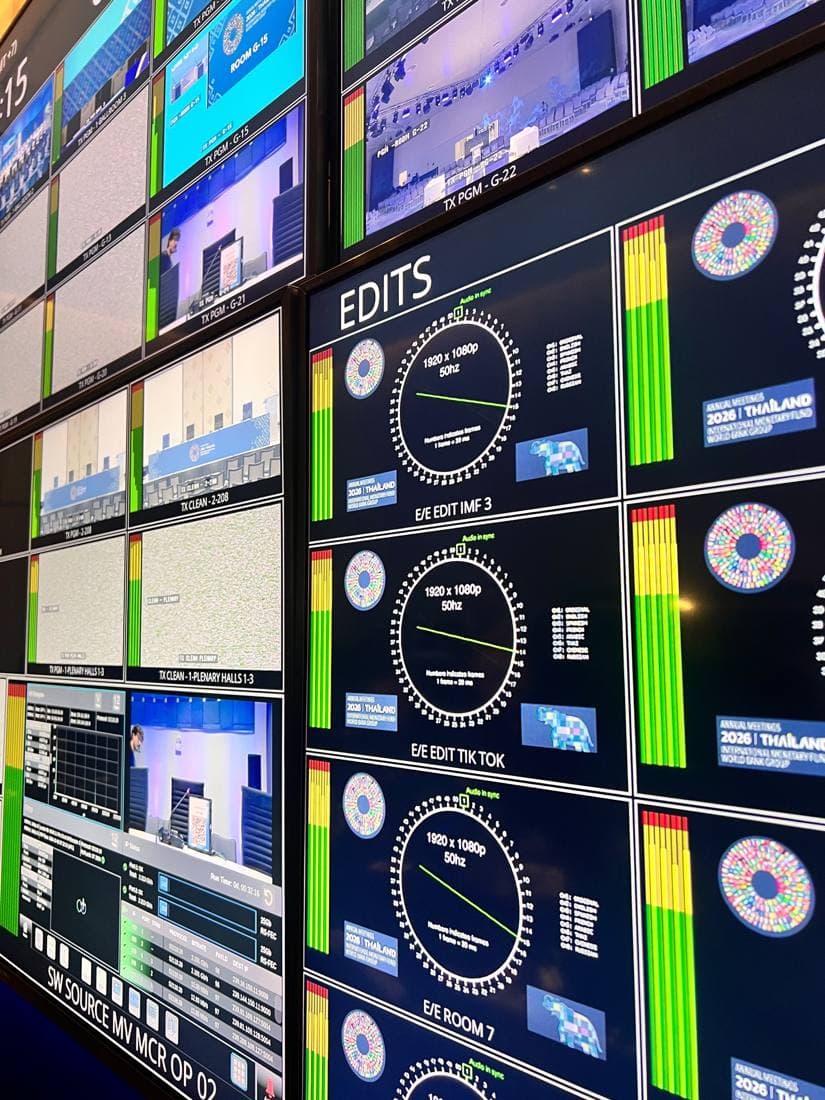
Program and clean feeds per room, plus edit positions for broadcast and social.
Look at the master control wall and it does the talking. A program feed and a clean feed from every room. Edit positions cutting for broadcast and for social. Every edit carrying the original floor sound alongside interpretation tracks in multiple languages.
Every one of those boxes is a dependency. Every dependency is a place a deadline can die.
This is what Event Operations looks like in 2026. Not a single feed to a single broadcaster. Outputs from every room, in every interpretation language, to audiences who each expect a different cut, on their own deadline, with no tolerance for "we're looking into it."
Where MediaLab comes in
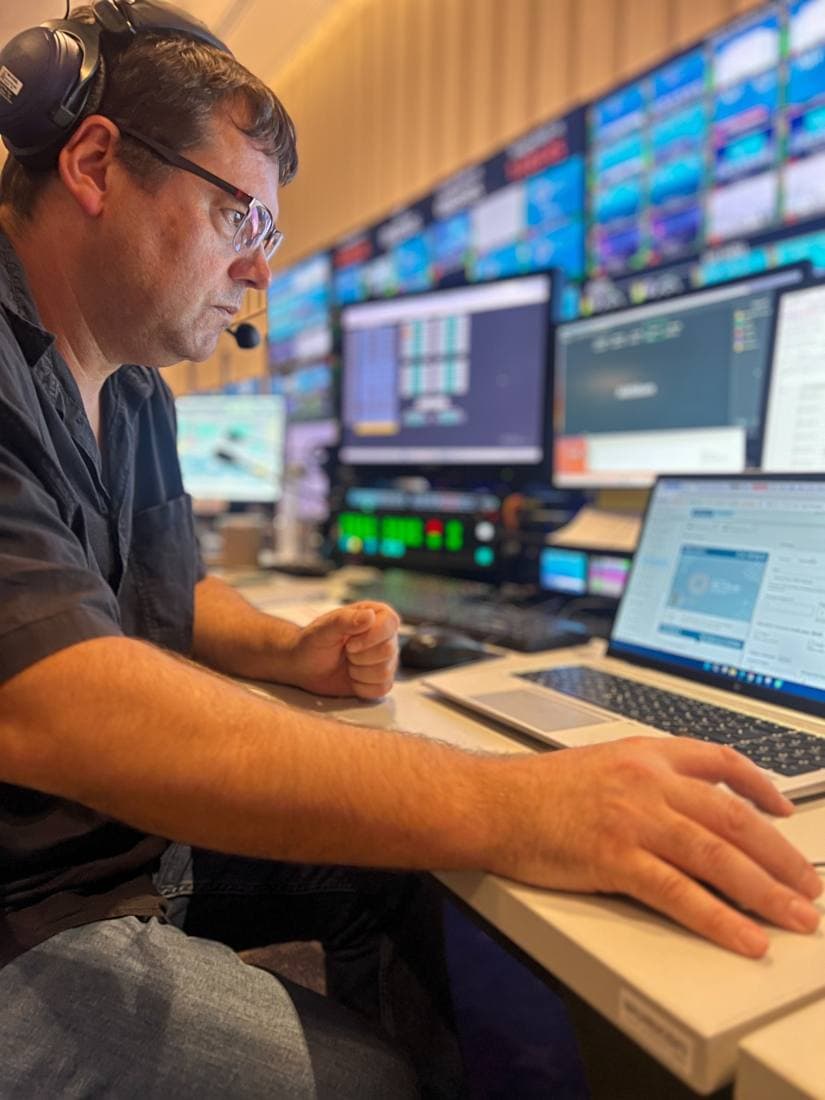
Real work, real deadlines.
MediaLab is not in that room. Our part, together with our partner Gravity Media, is the unglamorous one: getting what the room produces to everyone who is not in it. IMF staff and press elsewhere in the world watch recordings in the language they need, download the source MXF when they need broadcast quality, and cut their own clips.
Here is the honest measure of success: nobody waiting on a recording should be thinking about us. If they are, something went wrong.
Boringly reliable is not a tagline. It is the job description.
Bangkok was not our first Annual Meetings together
Gravity Media and MediaLab have run this kind of week before. At the IMF Annual Meeting in Marrakesh, Gravity Media ran a centralized media operation on MediaLab: more than 100 high-profile sessions across six days, content staged for 35 meeting rooms across 8 venues, and more than 6,000 media assets handled.
That history is what makes a quiet week possible. The workflow had been tested under load. The people on both sides already knew how the other works. Nobody had to learn a new tool or a new partner during the plenary.
Three things I would tell any Event Operations lead
- Run the drill on your workflow, not just your building. Upload, transcode, share, revoke access. All of it, end to end, before day one.
- Decide who sees what before the first session. Press, partners, internal teams. Permissions set during a live event are permissions set in a hurry.
- Work with partners you already trust. The week of the event is the wrong week to learn a new tool or a new team. Bring the workflow, and the people, that have already done it together.
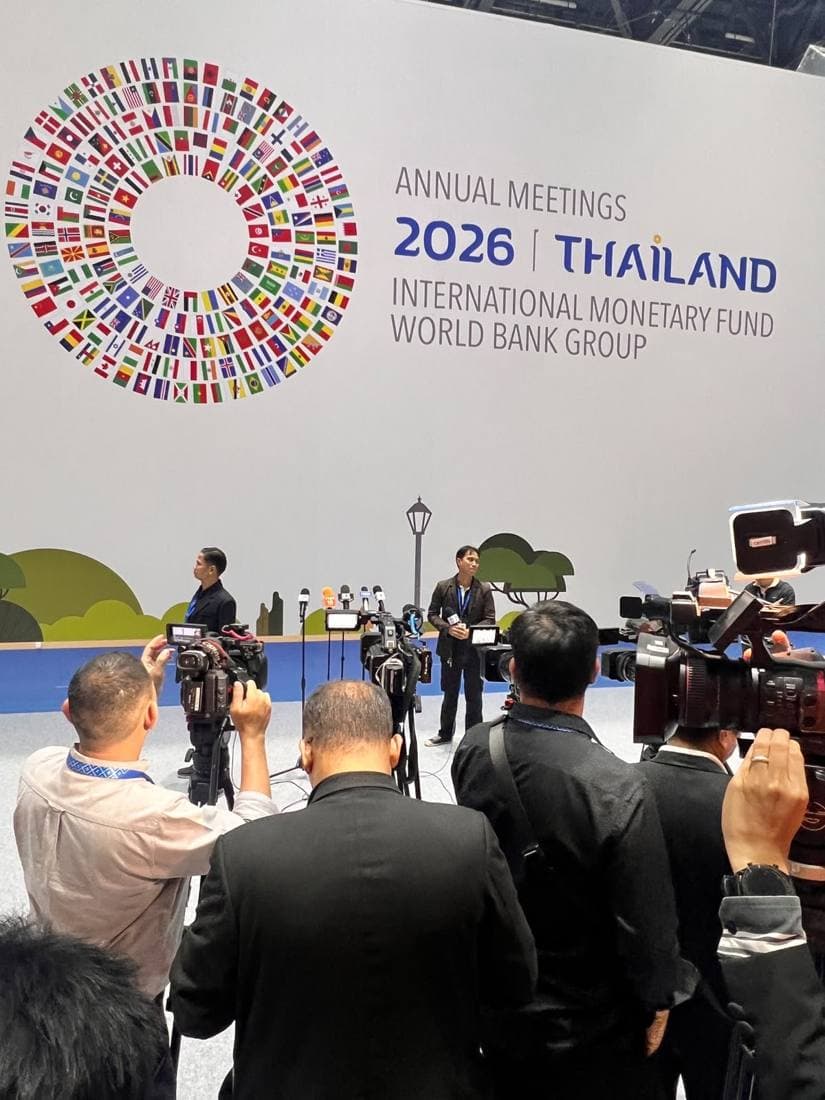
The audience on the other end of every upload.
On plenary day, somewhere in that building, an editor was finishing a cut while a newsroom in another time zone waited for it. If the week was rehearsed properly, that handoff was the least interesting thing that happened all day.
The event is the deadline. It doesn't move. Neither should your content.
Planning media operations for an event that cannot slip? Let's talk about how teams like the IMF run it.