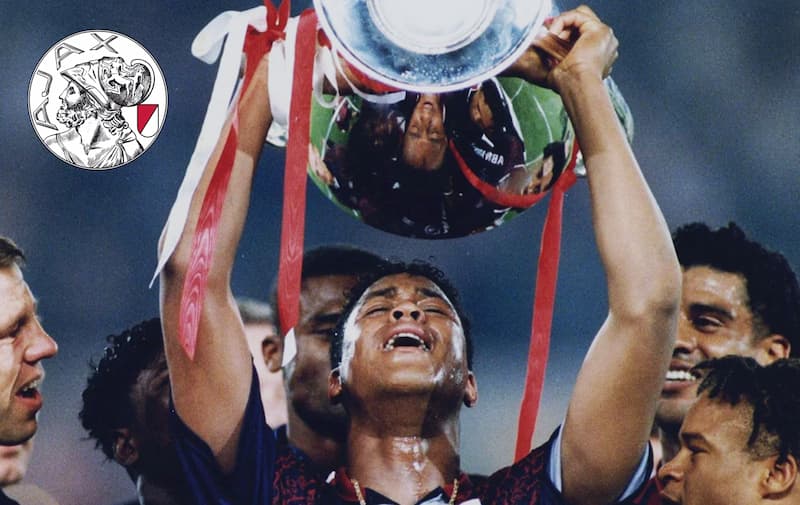
Amsterdam FC Ajax built a searchable archive of fan media from their Champions League win

A final in Vienna. Celebrations along the canals in Amsterdam. All of it sitting in shoeboxes, camcorder tapes, and photo albums. The content existed. It just wasn't Ajax's, wasn't digital, and wasn't described. When Ajax Media set out to collect it, they didn’t open an inbox, but built a front door.
Book a demo
AFC Ajax, via Ajax Media
00SNAPSHOT

PROBLEM

Collecting fan-shot material from the 1995 Champions League campaign

COMPANY

AFC Ajax, via Ajax Media

LOCATION

Amsterdam, Netherlands

KEY OUTPUT

Supporters, uploading material they recorded themselves in 1995

CAMPAIGN

Fan-sourced collection of photos, video, and personal memories from the 1995 Champions League campaign

01
The challenge: The contributors were strangers and the media was thirty years old

Ajax wanted fan-shot photos and video from 1995. That put the club in an unusual position for a media operation.

The contributors were not producers under contract or agencies with a delivery spec. They were thousands of supporters with no account, no training, and no reason to tolerate friction. Anything that asked more of them than a few minutes would lose the material.

The media itself was the second problem. Nothing shot in 1995 arrives clean. It comes off tape, off film, off a scanner, in whatever format the person happened to have. And it arrives with no information attached, because the only person who knows what it shows is the one who lived it.

The third problem was the one that actually decides whether a project like this is usable. Ajax needed proper permissions in place to use what came in, which meant being able to reach the person who sent it. Collect thousands of files without that, and the club owns an archive it can't publish.

02
The decision: Capture the context at the point of upload

The requirement was a collection of user generated content whose process was simple enough for a supporter on a phone and structured enough for a media team to work with afterwards. Those two things usually pull against each other. Every field added to a form costs submissions, and every field removed costs the archive.

Ajax resolved it by asking the contributor for the one thing only the contributor could give: what the memory was, and where it happened. Everything else the system handled. The decision was to treat the upload as the moment the record gets created rather than as a file drop to be sorted out later.

03
The implementation: A branded portal, one form, one destination

MediaLab and Ajax built a branded upload portal carrying the club's identity rather than a vendor's. Fans were invited through marketing campaigns to upload photos and video through a single form.

Each submission arrived with metadata attached, including uploader details, dates, and event context.

That gave Ajax's media team something they could search, filter, and sort before opening a single file, and it meant Ajax could reach the uploader for permissions and follow-up.

Everything landed in one central location for the media team to review and approve.

BEFORE / AFTER

An archive that was searchable on day one

BEFORE

The usual approach

  • Collect through an inbox and social replies
  • Describe the material later, if anyone gets to it
  • Chase permissions file by file after the fact
  • Open files to find out what they contain
  • A folder that ages into a mystery
AFTER

What Ajax did

  • One branded portal, one form
  • Contributors describe their own memory as they upload
  • Uploader identity and contact captured with the submission
  • Filter and search before opening anything
  • A structured archive tied to named contributors

Ajax now holds a body of fan-shot material from 1995 that did not exist in the club's possession before, described well enough to be used rather than merely stored. The media team curated it without working through unsorted submissions, because the sorting happened at the door.

The campaign also did something a media platform is not usually credited for. Asking supporters to hand over their own memories, and giving them a properly built place to do it, put the club and its supporters on the same side of the club's history rather than opposite ends of it.

05·

The archive outlives the campaign that built it

Fan-sourced collection is usually a marketing moment. It runs, it produces a highlight reel, and the raw material decays in a shared drive because nobody described it while they had the chance.

Ajax has the opposite problem to solve, which is a better one. The material is catalogued and attributed, so the next documentary, exhibition, or anniversary piece starts from something searchable rather than a collection drive.

The portal that gathered it is a pattern the club can run again for any moment in its history where the best footage was never in the club's hands to begin with.


Join the companies that trust MediaLab to keep media moving.

In 15 minutes, we'll show how MediaLab integrates with your existing tools, reduces operational risk, and simplifies media workflows without replacing what already works.